The Differences Between EMS, TENS, and RLT
Technical Principles and Core Differences
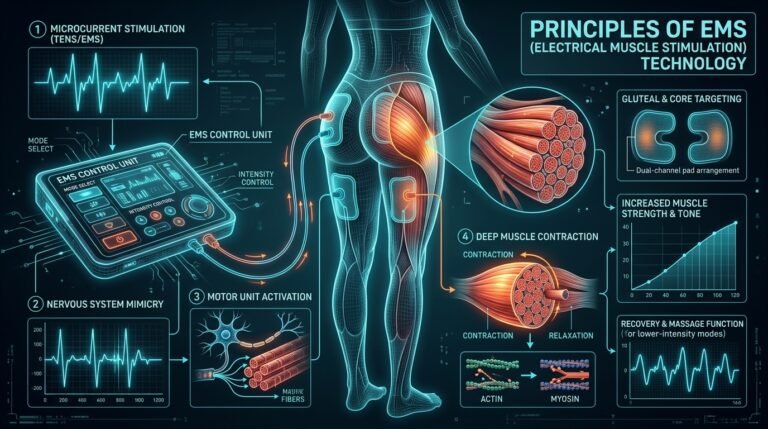
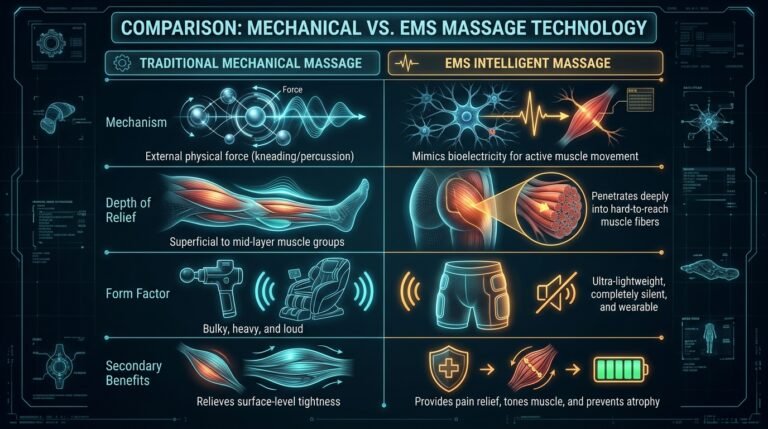
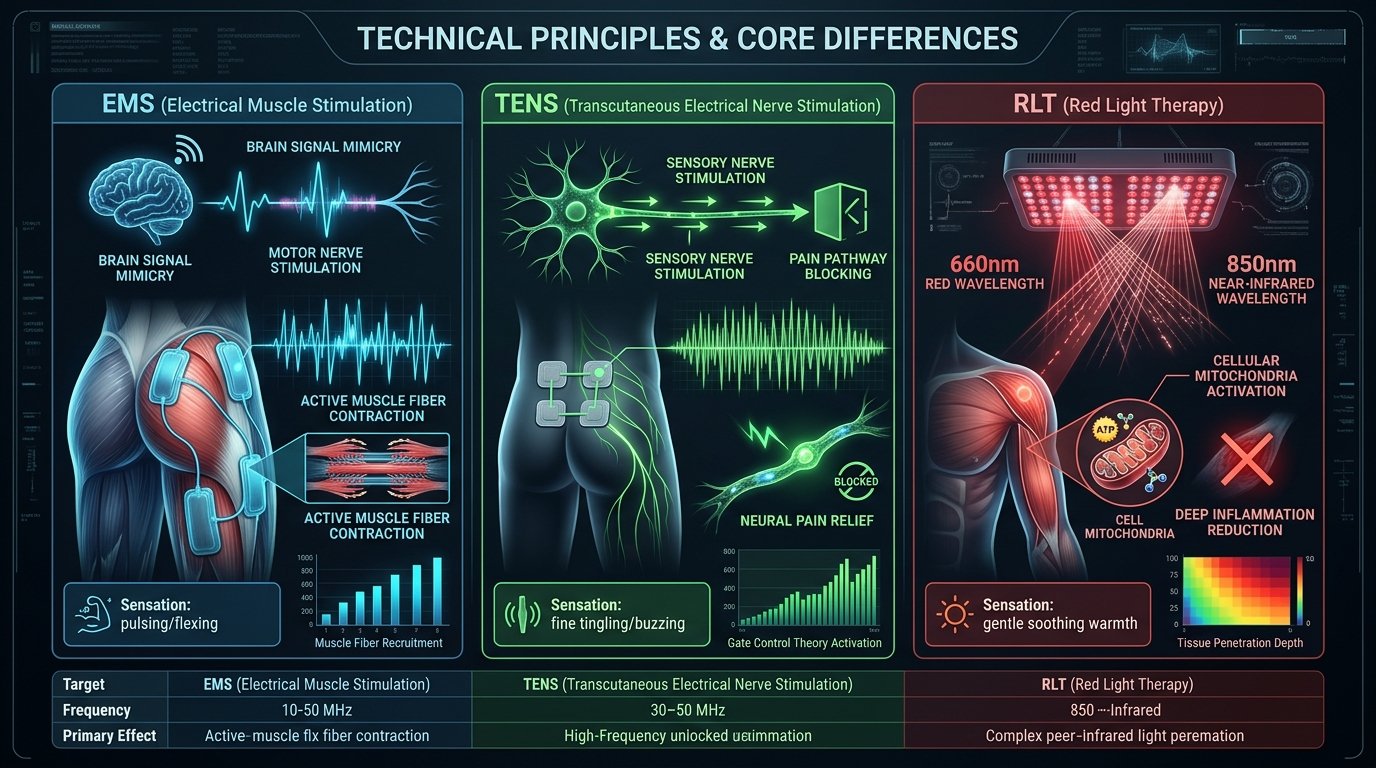
In personal healthcare and portable massage devices, EMS (Electrical Muscle Stimulation), TENS (Transcutaneous Electrical Nerve Stimulation), and RLT (Red Light Therapy) are the three pillars of modern recovery technology. Their core mechanisms, targets, and sensory experiences differ significantly:
| Technical Dimension | EMS (Electrical Muscle Stimulation) | TENS (Transcutaneous Electrical Nerve Stimulation) | RLT (Red Light Therapy) |
| Core Mechanism | Emits electrical impulses that mimic brain signals to stimulate motor nerves. | Emits electrical impulses to stimulate sensory nerves, blocking pain signals to the brain. | Projects specific wavelengths of light (e.g., 660nm Red / 850nm Near-Infrared) into cells. |
| Primary Target | Muscle tissue (muscle fibers). | Nervous system (pain pathways). | Cellular mitochondria (dermis and subcutaneous layers). |
| Key Benefits | Forces active muscle contraction, strengthens muscles, flushes edema, and prevents atrophy. | Provides immediate pain relief for acute or chronic neural and joint aches. | Accelerates cellular repair, stimulates collagen production, and reduces deep inflammation. |
| Sensation | Distinct pulsing, flexing, or deep involuntary muscle twitching. | Fine tingling, buzzing, or localized numbing sensations. | Gentle, soothing warmth with zero current or piercing sensation. |