What is EMS?
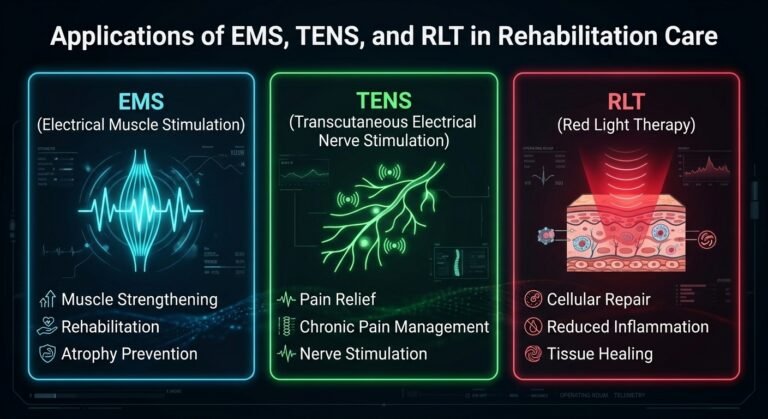
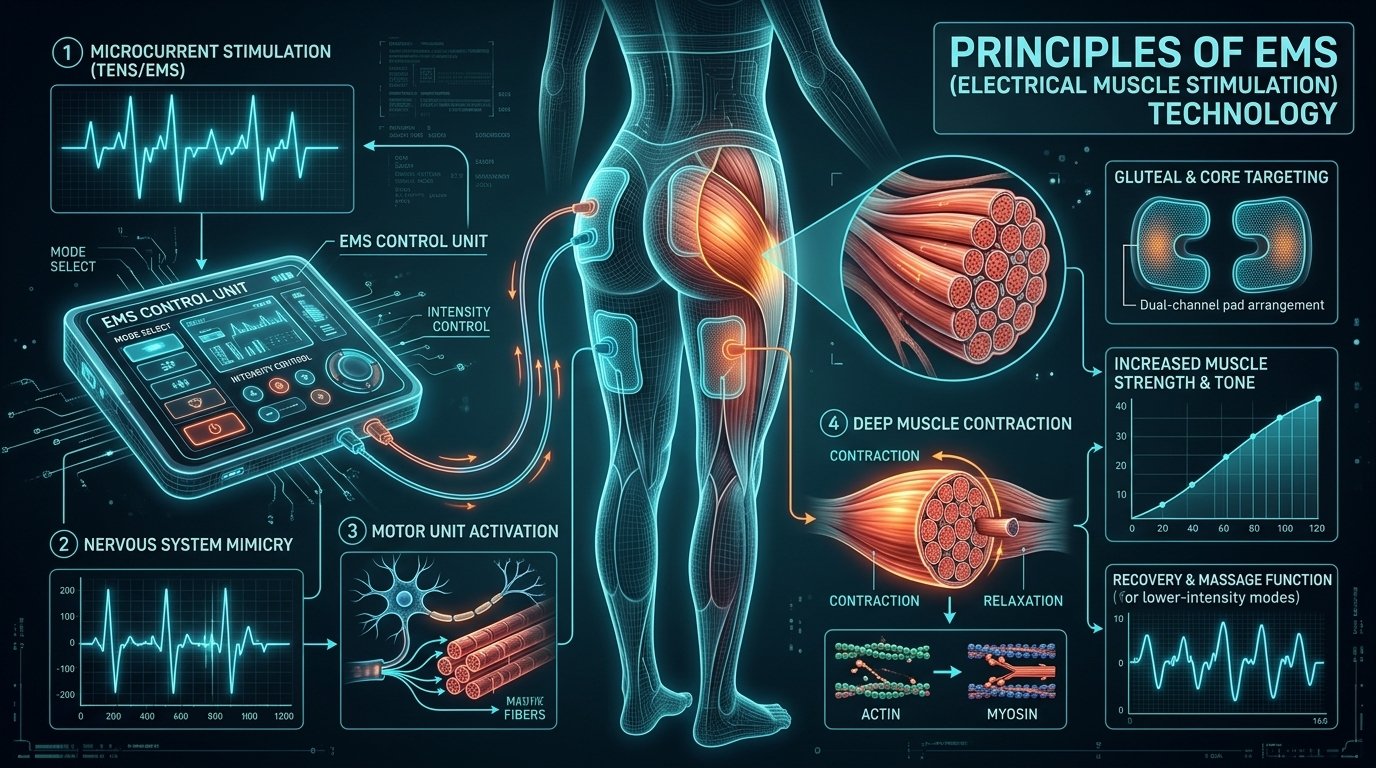
EMS (Electrical Muscle Stimulation) is a technique that uses electrical impulses to provoke muscle contractions. These impulses are generated by a device and transmitted through electrodes placed on the skin, near the muscles that are to be stimulated. This method has become very popular in recent years, both in the fields of physical rehabilitation, sports training, aesthetics, and physiotherapy.
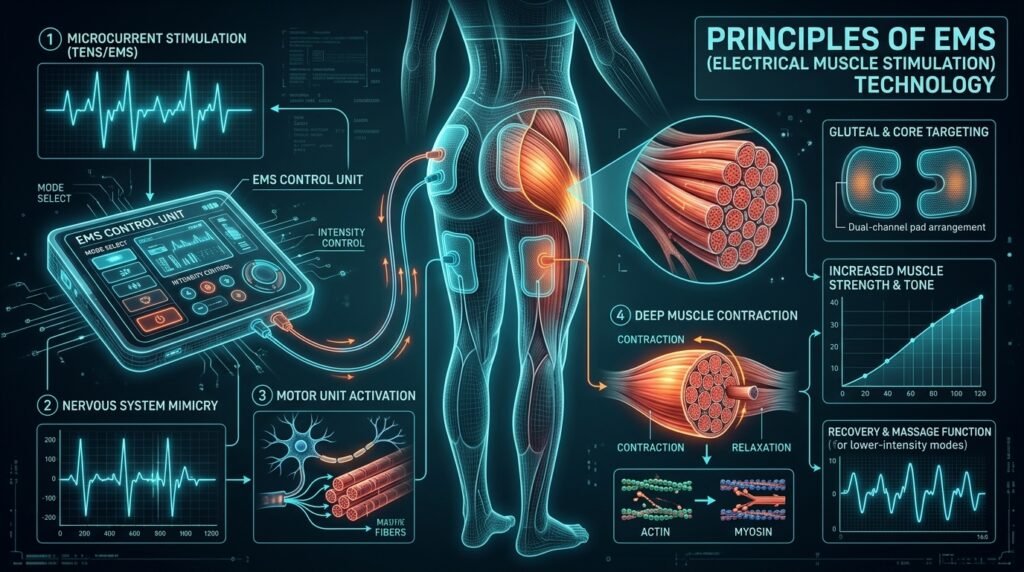
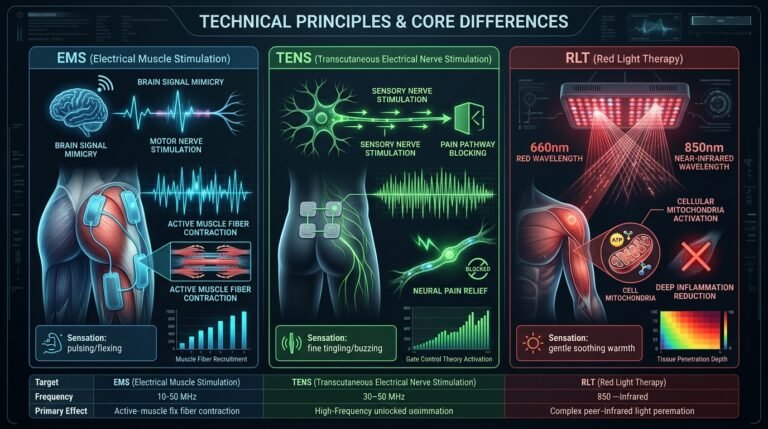
The Electrostimulation is based on the same theory as the human body’s nervous system. When we decide to move a muscle, our brain sends electrical signals through the nervous system to make the muscles contract. Electrical muscle stimulation simulates this natural process by sending electrical impulses directly to the muscles, causing muscle contraction without the need for conscious effort by the individual. EMS activates more muscle fibers than traditional exercise. EMS reaches all layers of muscles, activating type I and type II muscle fibers.
Applying EMS (Electrical Muscle Stimulation) technology to massage equipment shifts the paradigm from traditional surface-level friction to a deeper, neuro-muscular approach. This integration delivers several key benefits and advancements:
1. From “Passive Relaxation” to “Active Contraction”
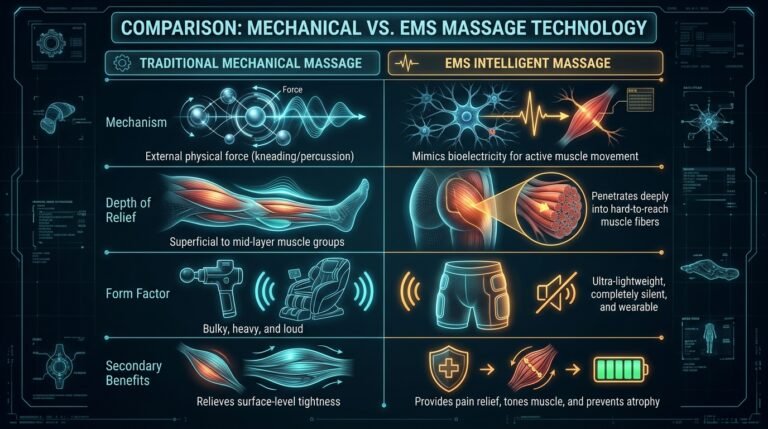
Traditional massagers (like percussion guns or kneading rollers) rely on mechanical force to manipulate tissue from the outside, which only provides passive relaxation.
- The EMS Benefit: By emitting low-frequency micro-currents that mimic the brain’s bioelectric signals, EMS directly stimulates motor nerves, forcing muscles to actively contract and relax. This internal movement engages deep muscle fibers, activating dormant muscles (such as glutes weakened by prolonged sitting) and helping to prevent muscular atrophy.
2. Enhanced Blood Circulation and Metabolic Flush
- The EMS Benefit: As muscles contract and relax under electrical stimulation, they create a natural “pump” effect. This “muscle pump” significantly accelerates local blood flow and lymphatic drainage. It quickly flushes out lactic acid and metabolic waste accumulated from long hours of sitting or intense workouts, offering faster fatigue recovery compared to mechanical massage alone.
3. Target Blockade of Chronic Pain
- The EMS Benefit: Low-frequency electrical currents stimulate sensory nerves to block pain signals before they reach the brain (a principle shared with TENS technology). Concurrently, it triggers the body’s natural release of endorphins, which act as organic pain relievers. This makes EMS highly effective at soothing chronic neural and muscular aches, such as lower back strain or tension headaches from stiff neck muscles.
4. Efficient Active Recovery and Muscle Toning
- The EMS Benefit: Long utilized in sports science and physical therapy, EMS builds and maintains muscle tone. When integrated into portable consumer devices (like EMS foot mats or wearable patches), it allows users to experience micro-workouts that firm muscles and reduce fluid retention (edema) without placing stress on the joints or breaking a sweat.
5. Lightweight, Ultra-Quiet, and Wearable Designs
- The EMS Benefit: Mechanical massagers require heavy motors, gears, and bulky batteries to generate force, making them noisy and cumbersome. EMS requires only a microchip and electrode pads. This allows manufacturing to shift toward paper-thin, wearable, and entirely silent designs—such as neck bands, eye masks, or adhesive patches—ideal for office use, travel, or bedtime relaxation.